
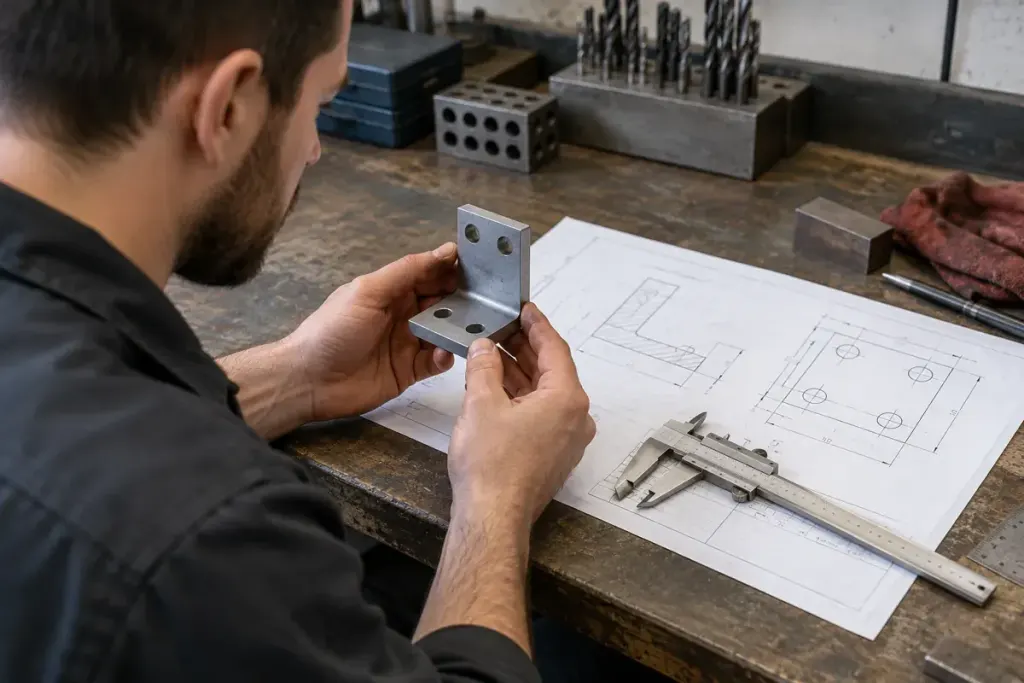
The model shows the shape, the email mentions an extra hole and a screenshot contains the newest dimension. A fabricator receiving all three has to decide which source controls the job. That uncertainty can cost more than the time saved by skipping a clean handover.
A useful drawing package tells the next person what to make, which version is current and what matters when the part is checked. It should also make unanswered questions visible before material is cut.
Put one revision in charge
Give the drawing and associated model a clear identifier and revision. Remove superseded files from the outgoing package or mark them unmistakably as reference only. Include the units and the contact responsible for technical questions.
For an illustrative bracket order, the handover might contain one released drawing, one matching model and a short note describing the quantity and finish. If a dimension changes, issue the corresponding revision rather than asking the supplier to remember an exception in a chat thread.
Explain the interfaces
Identify the features that determine how the part meets other components. These may include mounting-hole positions, mating surfaces, bend relationships or the space needed for an inserted item. Tolerances should reflect functional needs and the manufacturing process, with a qualified designer setting the requirements where appropriate.
Protolabs’ sheet-metal quoting guidance shows why supporting drawings can matter: hardware type and location may need to be supplied when the model does not include them. Its service-specific limits are examples, not universal capabilities of every workshop.
Name the things a shape does not say
Confirm the material specification, thickness, finish, hardware and any assembly requirements. A model of a hole does not necessarily identify the fastener that belongs there. Similarly, a rendered colour does not fully define a coating system.
If you are still deciding a detail, label it as an open question rather than allowing a placeholder to look approved. Ask the supplier to flag manufacturing concerns before proceeding. A short pre-production discussion is easier than reworking a finished batch.
Agree how the first part will be reviewed
Describe which dimensions or features need verification and what records are required. For a trial order, ask whether a first-off or sample review is suitable before committing to the full quantity. The method depends on the application, risk and supplier’s process.
Avoid requiring unnecessarily tight tolerances everywhere simply to appear precise. A tolerance that does not serve the function can affect process choice, inspection and cost. Conversely, leaving a critical interface ambiguous can make an otherwise attractive part unusable.
Close the handover loop
Ask the supplier to confirm the revision and resolve questions in a documented place. Keep the accepted changes with the released package, not in an individual’s memory. When the parts arrive, compare them against that agreed record.
The drawing is a communication tool as well as a technical document. Its strongest feature is often that someone who was not in the design meeting can understand what is required and know when to ask rather than guess.
Continue exploring: Before Specifying a Powder-Coated Part, Describe Where It Will Live.