
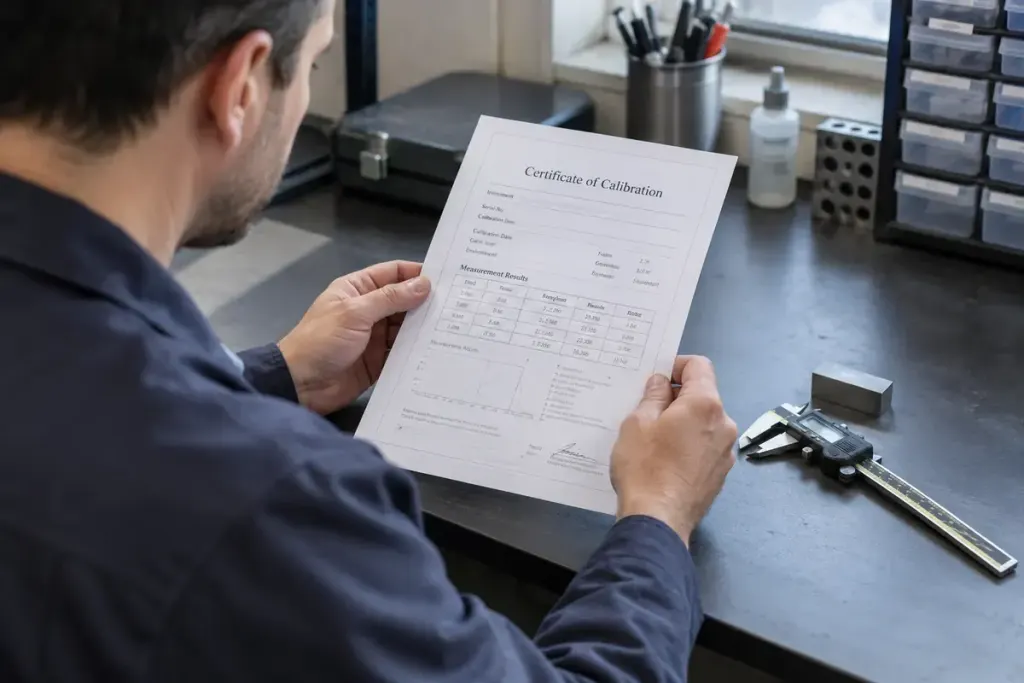
A sticker saying “calibrated” can be mistaken for a promise that an instrument was adjusted and now reads perfectly. Calibration and adjustment describe different activities. Keeping them separate in the record makes it easier to understand what happened to the tool.
NIST describes calibration as a measurement process relating an instrument response or an artefact’s property to reference standards or a designated process. Adjustment changes the instrument’s response. A calibration may identify a difference without any adjustment being appropriate or performed.
Keep the condition found on arrival
Results recorded before an adjustment can help a quality team assess previous measurements. If only the final result survives, information about the tool’s earlier condition may be lost. Agree the required reporting with the calibration provider before sending equipment away.
Ask for clear identification of the instrument, tested points or range, method, relevant conditions, results, and uncertainty where applicable. If adjustment occurred, the report should distinguish the initial and subsequent results rather than presenting them as one undated list.
Acceptance depends on the intended work
A measured deviation is not automatically acceptable or unacceptable for every task. Compare the results with the requirements of the actual process, using the organisation’s decision rules and competent technical judgement. A tool suitable for one inspection may be unsuitable for another with tighter needs.
When a result raises concern, follow the established process for identifying the equipment, restricting use, and assessing affected work. Do not erase the history by adjusting the tool and treating the final reading as proof that earlier measurements were sound.
A useful equipment record tells a sequence: what was found, what was changed, what was measured afterwards, and who authorised its return to use. That sequence is more informative than a sticker alone and gives future reviewers a basis for decisions rather than an unexplained pass label.