

IoT Machinery Maintenance: The Role of IoT in Streamlining Heavy Machinery
IoT Machinery Maintenance: The Role of IoT in Streamlining Heavy Machinery
Heavy machinery is the backbone of industrial operations, yet maintaining it has traditionally depended on fixed schedules, manual inspections, and reactive repairs. These methods can keep equipment running, but they may also lead to unnecessary servicing, overlooked damage, and costly production interruptions.
The Internet of Things is changing this process by connecting machines, sensors, maintenance teams, and operational systems. Through continuous data collection and intelligent analysis, companies can identify equipment problems earlier, plan maintenance more accurately, and extend the productive life of valuable assets.
How IoT Is Transforming Industrial Maintenance
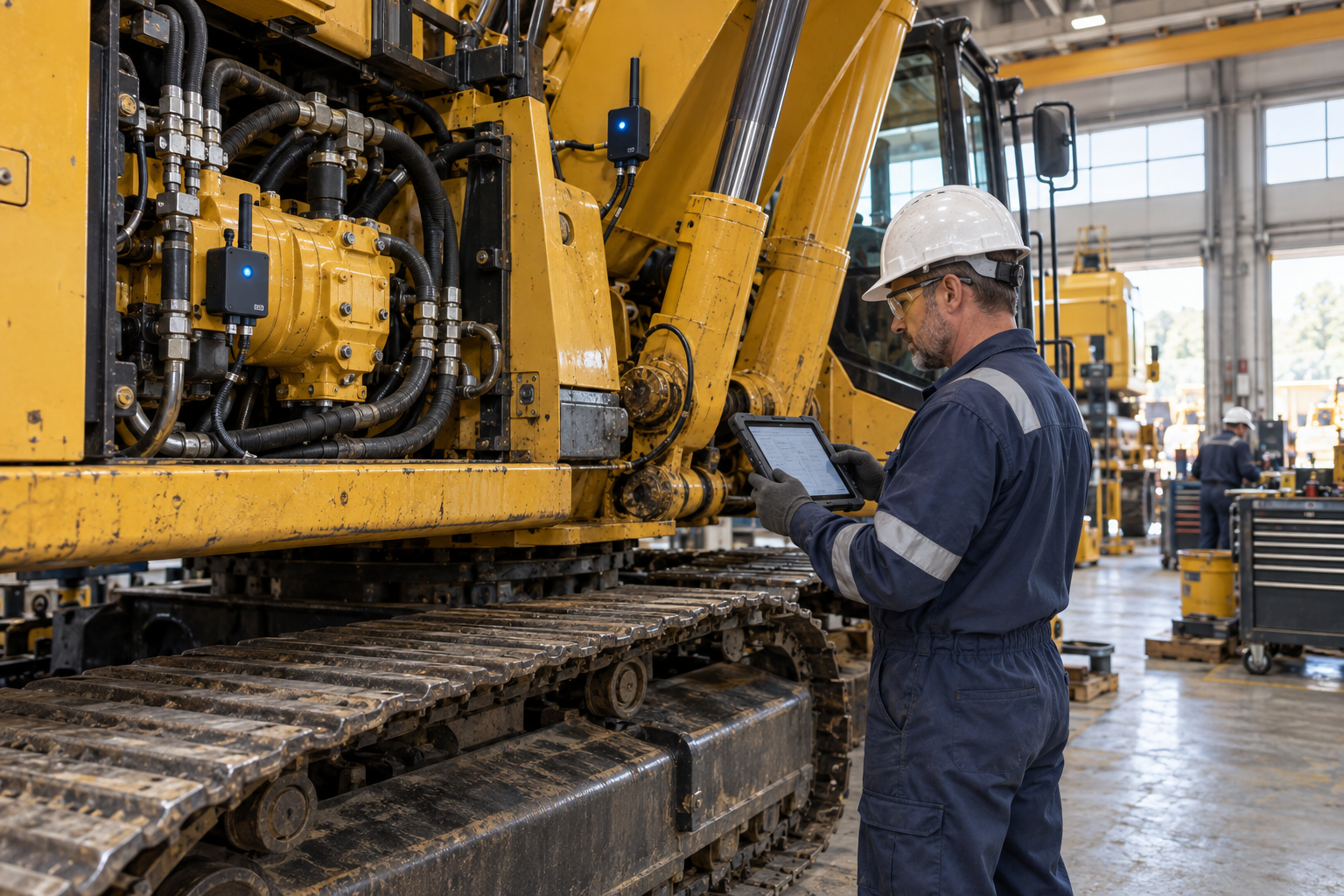
Industrial IoT systems use connected sensors to monitor machinery while it operates. These sensors can measure temperature, vibration, pressure, oil condition, electrical current, fuel consumption, and other performance indicators.
The collected information is transmitted to a centralized platform where it can be analyzed in real time. Instead of waiting for an operator to notice unusual behavior, maintenance teams receive alerts when equipment begins operating outside its normal range.
This practical application of IoT in manufacturing gives industrial facilities greater visibility into machine health. It also helps maintenance personnel distinguish between temporary fluctuations and patterns that indicate a developing fault.
As a result, maintenance decisions become based on actual equipment conditions rather than assumptions or rigid calendars.
Moving From Reactive to Predictive Maintenance
Reactive maintenance begins after a machine has already failed. Although this approach may appear economical in the short term, an unexpected breakdown can stop production, damage nearby components, and create urgent repair expenses.
Predictive maintenance offers a more controlled alternative. Connected devices continuously collect operating data, while analytical software searches for changes that commonly occur before equipment failure.
For example, rising bearing temperature combined with unusual vibration may indicate lubrication problems or mechanical wear. Detecting this combination early allows technicians to inspect the component before it causes a larger breakdown.
A well-designed heavy equipment monitoring system can therefore help a facility schedule repairs during planned production pauses. This reduces emergency work and gives teams enough time to prepare replacement parts, tools, and qualified personnel.
Detecting Small Problems Before They Grow
Many serious failures begin with minor abnormalities. A loose component may create a small vibration change, while a damaged seal might cause a gradual pressure drop.
Without continuous monitoring, these warning signs can be difficult to detect during routine inspections. IoT sensors record subtle performance changes over time, making gradual deterioration easier to recognize.
This early detection is especially valuable for machines that operate continuously, work under heavy loads, or are installed in locations that are difficult to inspect manually.
Improving Maintenance Scheduling
Traditional preventive maintenance schedules usually rely on operating hours, mileage, or calendar intervals. While this method is more organized than reactive repair, it does not always reflect the true condition of each machine.
Two identical machines can experience different levels of wear because of variations in workload, environment, operator behavior, and material quality. Servicing both machines at the same interval may cause one to receive unnecessary maintenance while the other develops problems too soon.
With condition-based machinery maintenance, service activities can be triggered by real performance data. A component is inspected or replaced when its condition indicates that attention is required.
This approach helps companies use labor and spare parts more efficiently. It also reduces unnecessary equipment disassembly, which can introduce new problems when healthy components are repeatedly removed and reinstalled.
Reducing Unplanned Downtime
Unexpected downtime is one of the most expensive risks in industrial operations. The direct repair cost is only part of the impact. A stopped machine can delay production, disrupt delivery schedules, leave workers idle, and affect other connected processes.
IoT platforms help minimize these consequences by providing continuous equipment visibility. Maintenance teams can prioritize alerts according to severity and focus on problems that pose the greatest operational risk.
Remote access also allows engineers to review machine conditions without being physically present at every facility. When an alert appears, they can examine recent data, compare it with historical patterns, and decide whether immediate action is necessary.
This level of industrial equipment intelligence supports faster, more informed responses. It can also prevent maintenance teams from shutting down equipment for harmless variations that do not require intervention.
Supporting Safer Maintenance Operations
Heavy machinery presents significant safety risks, particularly when technicians must inspect moving components, high-temperature areas, pressurized systems, or difficult-to-reach spaces.
Connected sensors reduce the need for frequent manual checks in hazardous locations. Technicians can evaluate essential operating conditions from a secure workstation before approaching the equipment.
IoT data can also reveal unsafe patterns such as overheating, excessive pressure, unstable movement, or repeated overload events. Automated alerts give supervisors an opportunity to stop the machine before the condition becomes dangerous.
When combined with clear operating procedures, connected maintenance technology can strengthen workplace safety without removing the need for experienced human judgment.
Making Spare Parts Management More Efficient
Poor spare parts planning can extend downtime even when the equipment problem has already been identified. A facility may keep too many rarely used components in storage while lacking the critical part needed for an urgent repair.
Predictive insights help maintenance managers estimate which components are approaching the end of their useful life. They can order parts before failure occurs and avoid unnecessary emergency shipping.
Historical sensor data also shows how often certain components fail under specific operating conditions. Procurement teams can use this information to adjust inventory levels and evaluate whether alternative parts may offer better durability.
Better coordination between maintenance data and inventory planning reduces waste while improving equipment availability.
Integrating Machinery Into the Smart Factory
The value of IoT becomes even greater when maintenance platforms connect with broader factory systems. Machine condition data can support production planning, quality control, energy management, and enterprise resource planning.
If a critical machine shows signs of declining performance, production managers can redirect work to another line or adjust output before maintenance begins. This creates a coordinated response instead of treating equipment repair as an isolated activity.
Modern smart factory tech also makes it possible to compare performance across multiple machines or facilities. Managers can identify which assets consume excessive energy, experience repeated failures, or operate below expected capacity.
These comparisons support better investment decisions. Rather than replacing equipment based only on age, companies can consider reliability, maintenance cost, energy use, and actual production value.
Creating a Shared Source of Maintenance Data
Disconnected records often make industrial maintenance harder than necessary. Inspection notes may be stored on paper, repair histories in spreadsheets, and sensor data inside separate machine interfaces.
An integrated IoT platform brings this information together. Technicians can access maintenance history, operating trends, alerts, and service instructions from one environment.
A shared system also improves communication between operators, engineers, supervisors, and equipment suppliers. Everyone can work from the same data instead of relying on incomplete reports or individual observations.
Challenges to Consider Before Implementation
IoT adoption requires more than installing sensors. Companies need reliable connectivity, compatible hardware, secure data storage, and software that can translate measurements into useful maintenance insights.
Older machinery may require retrofit sensors or communication gateways. Sensor placement must also be planned carefully because inaccurate installation can produce misleading information.
Cybersecurity is another important consideration. Every connected device can become a potential entry point into an industrial network. Strong authentication, network segmentation, software updates, and controlled user access should be part of the implementation strategy.
Teams must also avoid collecting data without a clear purpose. The most effective predictive maintenance solutions focus on measurements connected to specific failure risks, maintenance decisions, and operational goals.
Building a Practical IoT Maintenance Strategy
A successful implementation often begins with a limited pilot project. Companies can select one important machine, identify its most common failure modes, and install sensors that measure the relevant conditions.
The results should be compared with inspection findings and maintenance records. This allows the team to refine alert thresholds and confirm whether the system produces useful recommendations.
After the pilot proves its value, the approach can be expanded gradually to other equipment. Maintenance personnel should be involved throughout the process because their practical knowledge helps interpret data and identify realistic warning signs.
Training is equally important. Technicians do not need to become data scientists, but they should understand how to review trends, respond to alerts, and document maintenance outcomes.
The Future of Heavy Machinery Maintenance
IoT is moving industrial maintenance toward a more proactive and connected model. Machines are no longer passive assets that receive attention only at predetermined intervals or after failure.
They can now communicate changes in their condition, helping teams recognize developing problems and choose the most appropriate response. As sensor technology and analytical tools continue to improve, maintenance recommendations will become more accurate and easier to integrate into daily operations.
For industrial companies, the greatest advantage is not simply having more data. It is the ability to turn that data into timely action.
By combining connected sensors, skilled technicians, secure systems, and clear maintenance priorities, businesses can reduce downtime, improve safety, control operating costs, and keep heavy machinery productive for longer.