

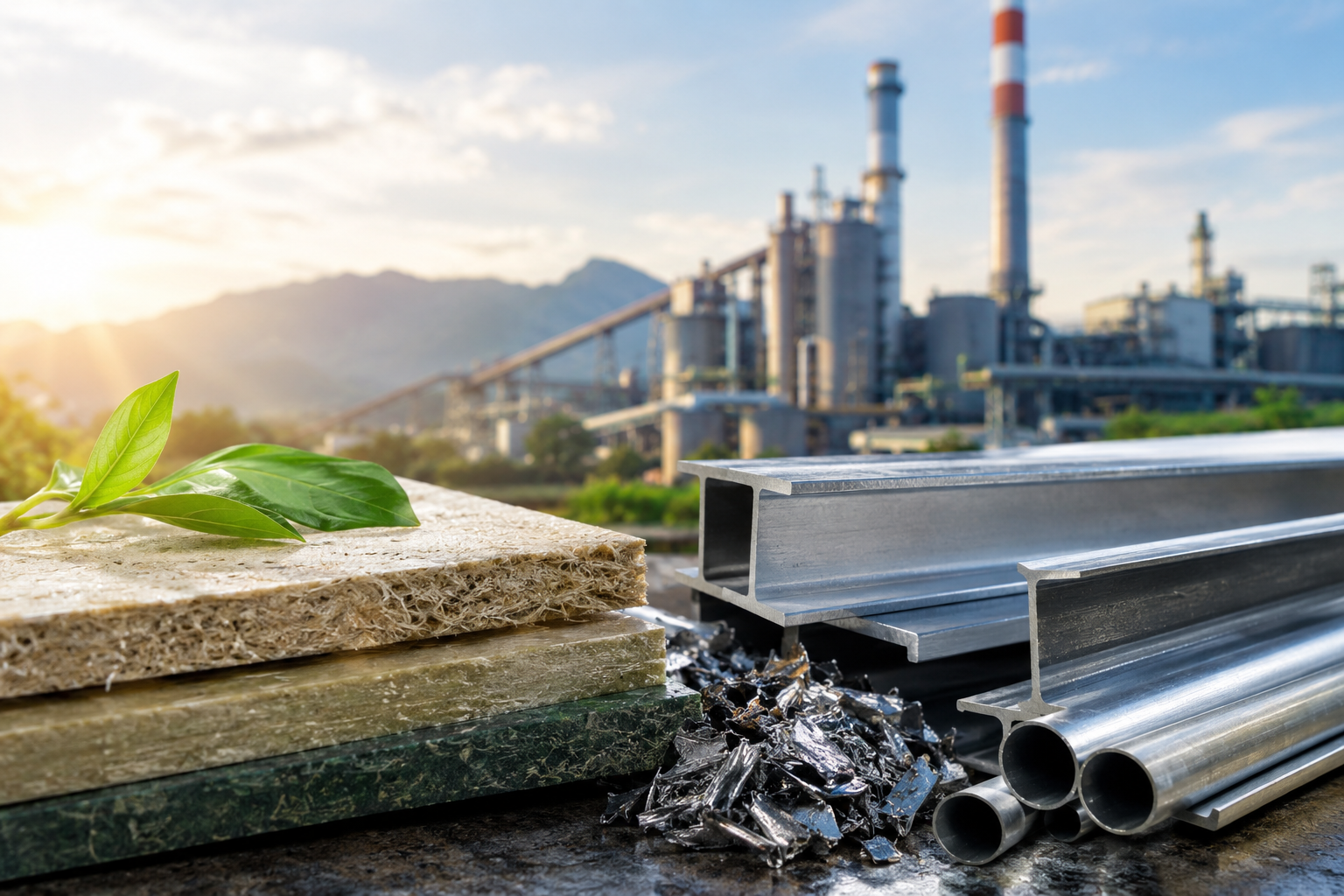
Green Engineering: The Push for Sustainable Materials in Heavy Industry
Green Engineering: The Push for Sustainable Materials in Heavy Industry
Heavy industry has long been associated with high energy consumption, intensive resource use, and significant environmental impact. As industries face increasing pressure to reduce emissions and waste, green engineering is becoming an important strategy for building more sustainable production systems.
The shift is not simply about using less energy. It also involves rethinking how industrial products are designed, manufactured, maintained, and eventually recycled. From construction equipment to automotive components and industrial machinery, material selection can have a major influence on environmental performance.
Today, manufacturers are exploring sustainable industrial materials that can provide the strength, durability, and reliability demanded by demanding industrial applications while reducing their overall environmental footprint.
Why Green Engineering Matters in Heavy Industry
Green engineering applies environmental considerations directly to engineering and manufacturing decisions. Instead of treating sustainability as an additional step after a product has been designed, engineers consider environmental impacts from the beginning.
Material selection is one of the most important areas of this approach. Traditional industrial materials may require large amounts of energy and raw resources during production. Some are also difficult to reuse or recycle at the end of their service life.
A more sustainable strategy considers the entire material lifecycle.
Engineers can evaluate raw material extraction, manufacturing energy, transportation, product durability, maintenance requirements, recyclability, and end-of-life recovery.
This lifecycle perspective can help companies reduce waste while maintaining the performance standards expected in heavy industry.
The Rise of Sustainable Industrial Materials
Demand for sustainable industrial materials is growing as manufacturers look for alternatives that combine technical performance with environmental responsibility.
The goal is not necessarily to replace every conventional material. Instead, engineers are identifying situations where recycled, renewable, or lower-impact materials can perform effectively.
Modern material development increasingly focuses on several characteristics:
- Lower embodied carbon
- Reduced dependence on virgin resources
- Improved recyclability
- Longer service life
- Reduced manufacturing waste
- Lower energy requirements
- Safer end-of-life disposal
These priorities are helping manufacturers move toward more circular production models.
Biodegradable Composites: A New Material Opportunity
What Are Biodegradable Composites?
Biodegradable composites combine a reinforcing material with a matrix that can break down under suitable environmental conditions.
Many emerging composite materials use bio-based fibers derived from sources such as plants. Natural fibers can provide useful mechanical properties while reducing dependence on certain petroleum-based inputs.
Although biodegradable composites are not suitable for every heavy-duty application, they can be valuable where extreme heat, impact resistance, or long-term exposure to harsh environments is not the primary concern.
Potential Benefits for Industry
The appeal of biodegradable composites lies in their potential to reduce environmental impact while offering useful engineering performance.
Natural-fiber composites can be relatively lightweight, which may reduce the energy required to transport components or operate equipment. Depending on the material formulation, they can also reduce reliance on conventional synthetic reinforcements.
For companies pursuing eco-friendly manufacturing, these materials can become part of a broader strategy that includes waste reduction, renewable feedstocks, and improved product design.
However, engineers must evaluate moisture resistance, temperature stability, mechanical strength, durability, and processing requirements before selecting biodegradable composites for industrial use.
The best application is one where environmental advantages complement the technical requirements of the product.
Recycled Steel and the Circular Industrial Economy
Why Recycled Steel Is Important
Steel remains one of the most important materials in heavy industry because of its strength, versatility, and durability. The challenge is that producing steel from virgin raw materials can require substantial energy and natural resources.
Recycled steel offers an important alternative.
Steel can be recovered from buildings, vehicles, machinery, industrial equipment, and other products. Once processed appropriately, this material can re-enter manufacturing streams rather than becoming waste.
This makes steel particularly valuable within a circular economy.
Recycled Steel Without Sacrificing Performance
A common misconception is that recycled materials are automatically inferior to newly produced materials. In reality, properly processed recycled steel can be used in demanding applications when it meets the required specifications.
Engineers must still consider composition, strength, fatigue resistance, corrosion behavior, and application-specific requirements.
Using recycled steel can also support green engineering objectives by reducing the need for virgin material extraction and helping manufacturers make better use of existing resources.
The result is a material strategy that focuses on keeping valuable resources in circulation for as long as possible.
Designing Products for Eco-Friendly Manufacturing
Material selection is only one part of sustainable engineering. Product design also influences how efficiently materials can be manufactured, assembled, repaired, and recovered.
Designers can reduce environmental impact by minimizing unnecessary material use without compromising structural integrity.
Modular construction is another useful approach. Components that can be removed and replaced individually may extend product life and reduce the need to discard an entire assembly.
Manufacturers can also consider disassembly during the original design process. If different materials can be separated easily, recycling and recovery become more practical at the end of the product’s useful life.
This type of thinking turns eco-friendly manufacturing into a design principle rather than simply a production target.
Balancing Sustainability With Industrial Performance
Heavy industry cannot adopt materials based on environmental credentials alone.
Industrial components often operate under extreme pressure, temperature, vibration, corrosion, and mechanical stress. A sustainable material that fails prematurely may create greater environmental and economic costs through replacement, downtime, and additional manufacturing.
For this reason, engineers need to balance sustainability with performance.
A material’s total environmental impact should be considered alongside its service life. A highly durable component that remains operational for decades may sometimes be preferable to a lower-impact material that requires frequent replacement.
This is why lifecycle assessment is increasingly important in material decisions.
The Role of Manufacturing Technology
Advances in manufacturing technology are also supporting the transition toward more sustainable materials.
Precision machining, additive manufacturing, automated material handling, and improved production monitoring can help reduce unnecessary material consumption.
Digital manufacturing systems can identify production inefficiencies and improve process control. In some applications, manufacturers can produce components closer to their final geometry, reducing the amount of material removed during fabrication.
Combined with recycled metals and emerging bio-based materials, these technologies can help create more resource-efficient industrial processes.
Building a More Sustainable Heavy Industry
The future of heavy industry will not depend on one revolutionary material. Instead, progress is likely to come from combining better engineering, responsible material selection, efficient manufacturing, and circular resource management.
Biodegradable composites demonstrate how renewable material concepts can enter industrial design. Recycled steel shows how established materials can remain valuable within a circular economy.
Meanwhile, green engineering principles encourage manufacturers to consider environmental impact alongside performance, cost, safety, and reliability.
Companies that invest in sustainable material solutions can also improve resource efficiency and prepare their manufacturing systems for increasingly demanding environmental expectations.
The transition will require careful testing, engineering validation, and application-specific decision-making. Nevertheless, the direction is clear: sustainable materials are becoming an increasingly important part of modern industrial innovation.
The Future of Green Engineering
Heavy industry is entering a period where sustainability and engineering performance are becoming increasingly interconnected.
The most successful approaches will not simply replace traditional materials. They will identify where recycled metals, biodegradable composites, renewable resources, and advanced manufacturing techniques can provide genuine advantages.
By combining material innovation with smarter product design and efficient production, manufacturers can move closer to a more circular industrial model.
Ultimately, green engineering is about designing systems that deliver industrial performance while using resources more responsibly. As technology advances, sustainable materials will play an increasingly important role in shaping the next generation of heavy industry.