
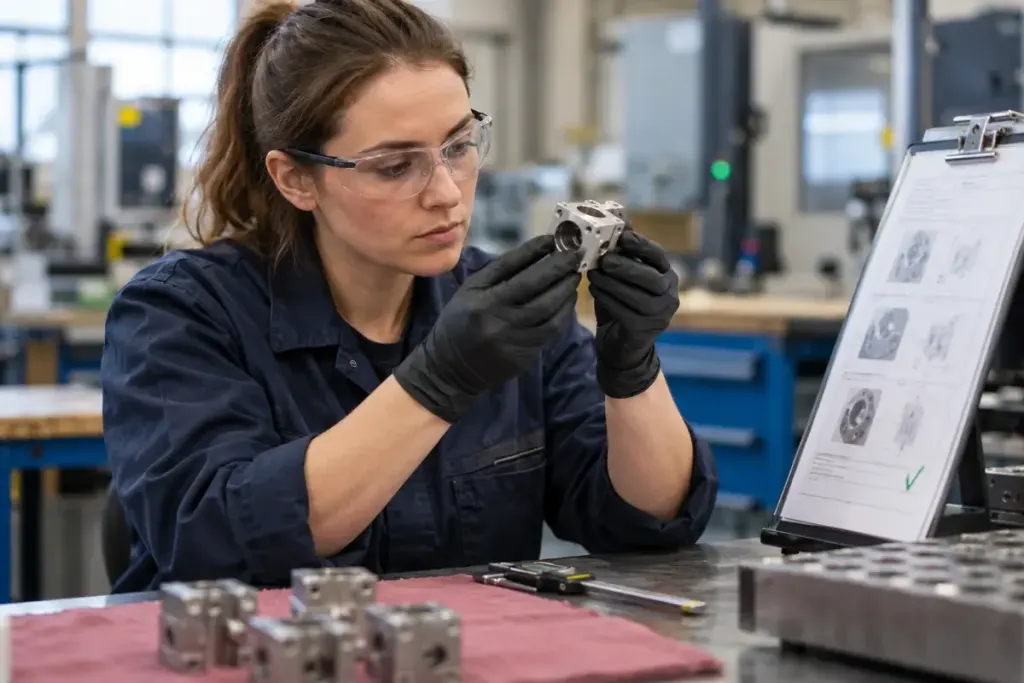
A component fails inspection, receives a small correction and returns to the production queue. It looks better, but nobody has recorded what now makes it acceptable. The original defect may be gone while a different requirement has been affected.
A rework instruction should describe both the authorised action and the check that follows it. The following example is a general planning aid; regulated products and customer-controlled processes must follow their applicable procedures and approvals.
Define the boundary of the correction
Consider a batch of brackets with an unwanted burr near a mounting hole. “Remove burr” is incomplete. The instruction needs to identify the affected parts, the permitted method and the drawing or specification that defines the finished condition.
It should also say when an operator must stop and escalate. If removing the defect would take the feature outside its allowed dimensions, continuing until the edge looks smooth is not an acceptable decision rule.
Keep the affected batch identifiable while the work is underway. Separate completed, awaiting-inspection and unresolved items using the site’s established controls. A neat pile of parts does not establish which ones have actually passed.
Inspect what the rework could change
The final check should address the original defect and any characteristics the correction could affect. In the bracket example, that might include the specified edge condition, relevant dimensions and any coating requirements. The actual checks must come from the product’s approved requirements, not from this hypothetical example.
- Identify the applicable acceptance criteria and their revision.
- Specify the inspection method and appropriate equipment.
- Record who performs and, where required, approves the check.
- Define what happens when the reworked item still fails.
A record stating only “reworked” describes an activity. A useful record links the affected item to the authorised instruction, the inspection result and the release decision. That distinction matters when someone later investigates the batch.
Before repeating the correction across a large quantity, use the site’s approval process to confirm the method on an appropriate initial sample. Rework should restore documented conformity; it should not quietly become an unreviewed alternative manufacturing process.