
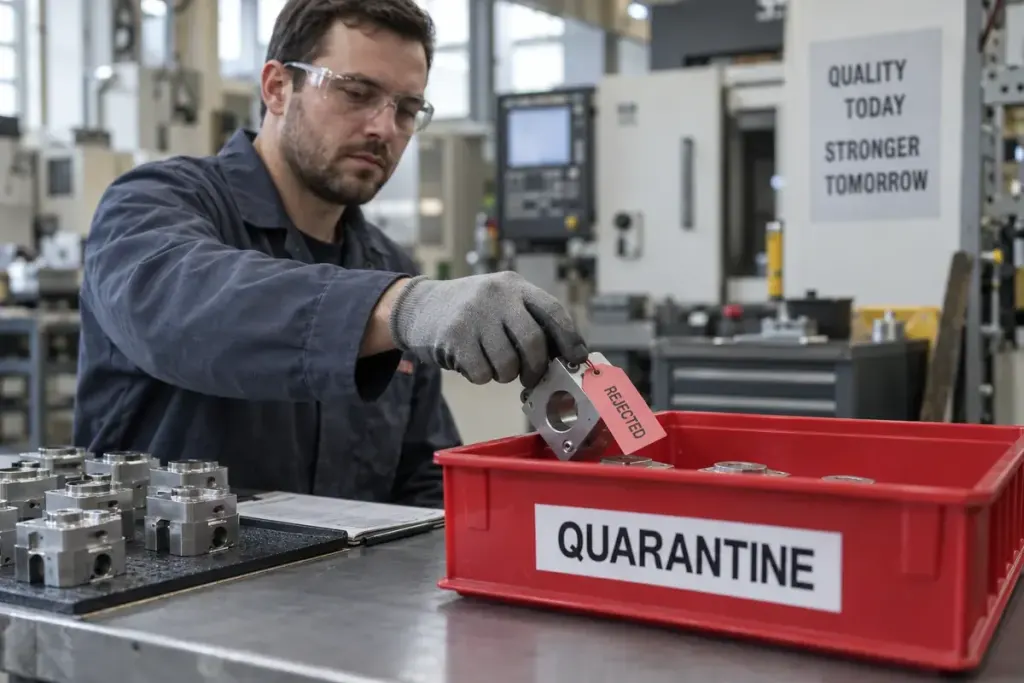
A rejected component is placed beside the machine while someone asks what to do with it. By the next shift, it looks like another part waiting for assembly. The inspection found the problem, but the handling process failed to keep that finding attached to the item.
Follow the site’s procedure for nonconforming material. The important elements are identification, controlled location and an authorised decision about what happens next. A coloured tray helps only when everyone understands its meaning and respects the boundary.
Keep the reason with the part
Record the part or batch identity, the observed issue and the relevant inspection reference. Describe the finding precisely enough for the responsible person to review it. “Bad part” is less useful than a measured result linked to the required tolerance or a documented surface defect.
Separate the record of a problem from a proposed solution. An operator noticing a defect does not automatically have authority to rework, scrap or release the item. Use the approval route defined for the job.
Control the return to production
If rework is authorised, identify the instruction and any required reinspection. Do not return the part to accepted stock merely because the visible flaw has been removed. The original requirement still needs to be satisfied through the appropriate check.
Consider neighbouring material where the same issue could apply. That does not mean rejecting everything without evidence; it means asking whether the finding affects only one item or a wider batch.
At shift handover, state what is held, where it is and who owns the next decision. Keep physical labels and electronic status consistent so a clean-looking part does not gain an accidental release.
A quarantine area is useful because it prevents uncertainty from becoming an unrecorded production choice. The process is complete only when an authorised disposition and its evidence remain traceable to the material.