
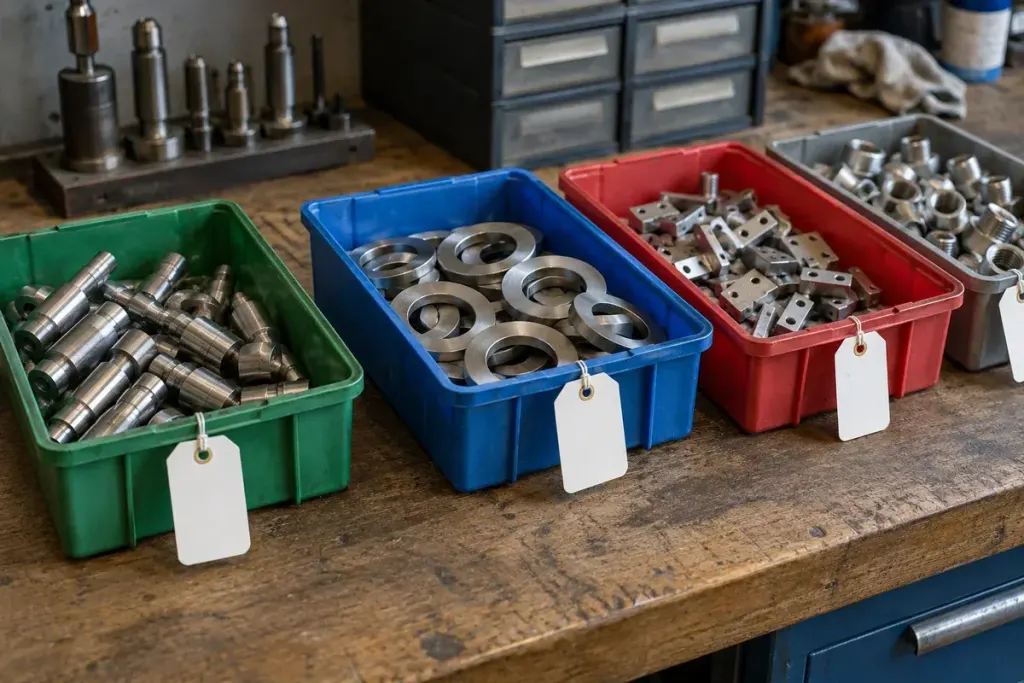
A dimensional problem appears in a delivered part. If identical-looking parts from several production runs were mixed without records, the investigation starts with a much larger question: which other parts might share the problem?
Define what the batch identifies
A batch number should connect to a documented production scope. That may include material input, process run, equipment, date and inspection record, depending on the product and applicable requirements. A printed code with no reliable record behind it provides little traceability.
Keep the identity attached when parts move between containers, finishing operations and packing areas. If a batch is divided, the new containers need a clear link to the original record. If materials are combined, record that relationship rather than assigning a convenient new label that hides it.
Try a small trace exercise
Select one completed shipment and ask the team to identify its production and inspection records. Then start with one material batch and identify where its finished parts went. These two directions answer different questions: where a shipped part came from, and where potentially affected material ended up.
Record gaps without immediately blaming the person at the last station. A label may fail because the process never specified who transfers it, because it does not survive cleaning, or because the receiving system cannot store the reference.
When a defect is found, follow the organisation’s quality procedure to contain suspect stock, assess the scope and decide appropriate customer communication. A batch link helps narrow the investigation; it does not prove that every part in that batch is defective or that neighbouring batches are automatically safe.
The practical measure of traceability is retrieval. Someone unfamiliar with the job should be able to follow the recorded chain without reconstructing it from a colleague’s memory.