
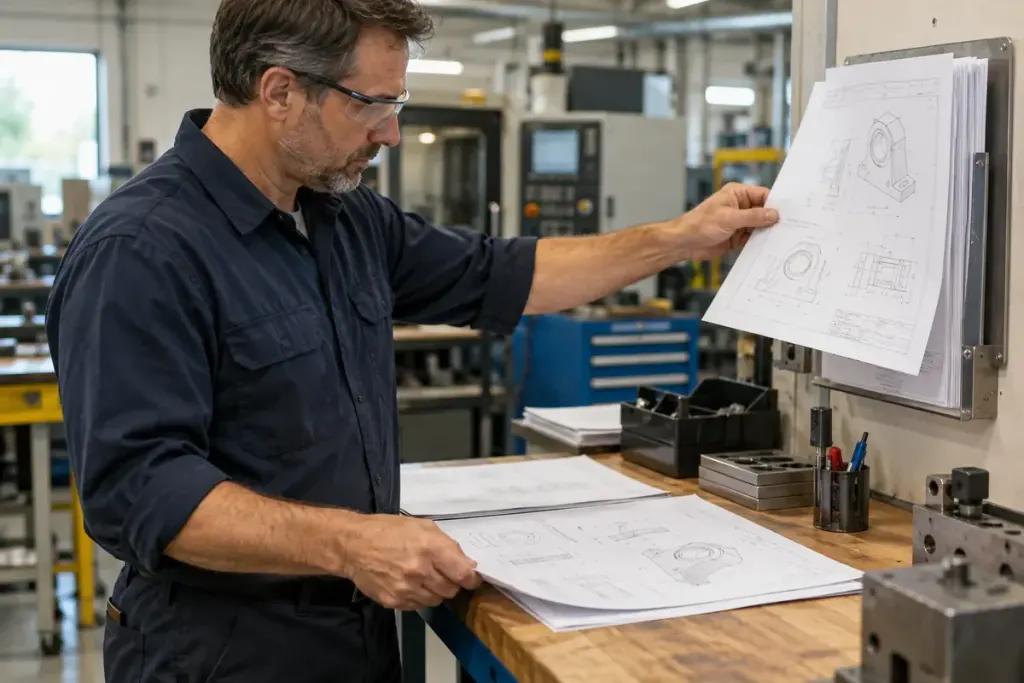
The engineering team updates a dimension, but the operator’s printed drawing still shows the previous revision. The email was sent successfully; the manufacturing instruction did not reach the point where it mattered.
Connect the revision to a specific job
A drawing number identifies the document, while its revision identifies a particular version. The job record should make both clear. Confirm which revision applies to work already started, work waiting in a queue and replacement parts produced later.
Do not assume that “latest” is always the correct instruction for every open order. A customer-approved change may apply from a defined batch or date. The responsible engineering and quality staff should establish that boundary and communicate it through the organisation’s controlled process.
Close the gap between release and use
- Release the approved revision through the authorised system.
- Identify affected jobs, tools, programmes and inspection documents.
- Remove or clearly segregate obsolete working copies.
- Confirm the operator can access and recognise the applicable revision.
- Record the required acknowledgement and checks.
A fictional change from one hole location to another may also affect a fixture and an inspection sheet. Replacing only the drawing leaves those connected instructions in conflict. Ask what else contains the old requirement.
If work has already been made to the previous version, stop and obtain the appropriate disposition rather than relabelling it as compliant. The decision may involve customer requirements, engineering assessment and the site’s quality procedures.
Make the next audit easy
Keep a traceable record of which revision was used for which batch. Retain historical versions in the controlled archive, not mixed with active bench copies. A short check at the start of a job—drawing number, revision and applicable order—can expose a mismatch before it becomes a stack of parts that nobody can confidently release.