
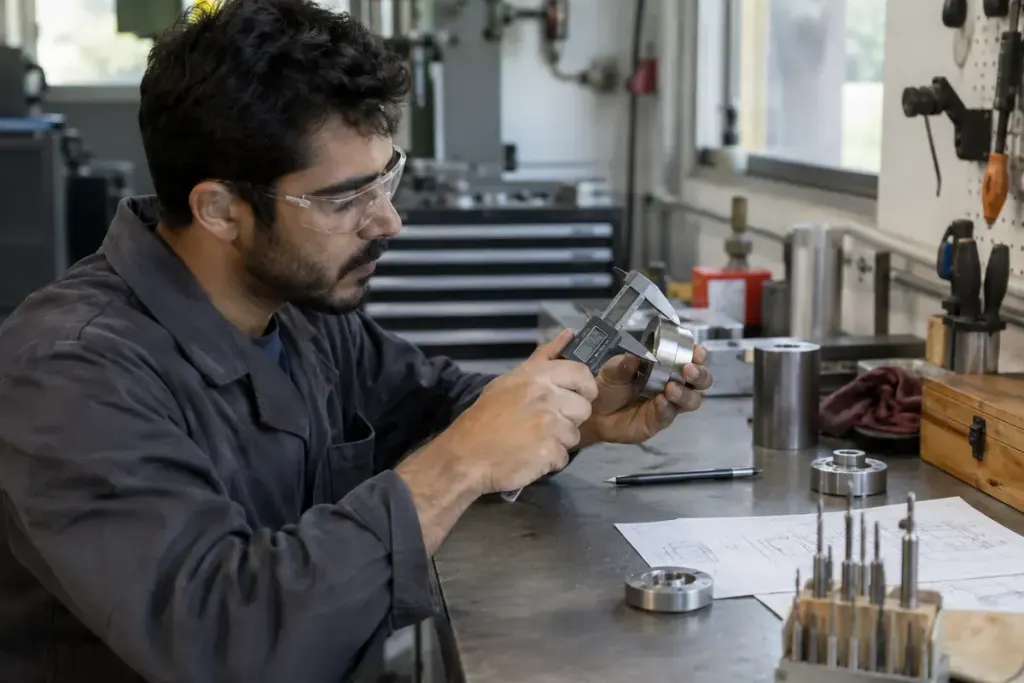
A machine can repeat the wrong setup very efficiently. First-off inspection creates a deliberate pause between preparing the process and allowing it to produce a full batch. The useful question is whether the initial output demonstrates that this setup meets the required criteria.
Define what must be checked
Use the current drawing, specification and approved inspection plan. Identify the dimensions, features, material or process conditions that need confirmation. “Looks like the sample” is not enough when the important difference is a hole position, thread or revision change.
The required checks depend on the product and process. A first-off check is not automatically a full first-article inspection, and it does not replace regulated or customer-specific requirements. Agree the scope with the responsible quality and engineering functions.
Make acceptance traceable
Record the part and revision, machine or setup reference, time, actual results, measuring equipment and person authorised to release the work. Keep the inspected piece identified where the procedure requires it. A tick without a result may hide a borderline measurement or an unclear criterion.
For an illustrative batch of brackets, the first piece might meet its overall size but have a hole offset caused by an incorrect fixture position. Catching that before routine production avoids repeating the same fault through the entire batch.
If a check fails, hold the affected output, correct the cause through the approved process and repeat the necessary verification. Do not adjust a number in the record to match the drawing or let production continue simply because the schedule is tight.
Decide when the pause repeats
Tool changes, material changes, interruptions or setup adjustments may require a new check under the control plan. Define those triggers in advance. Ongoing inspection is still needed because a good first piece cannot prove that every later piece remains within specification.
A first-off routine earns its place when it has a real release decision behind it. Otherwise it risks becoming a form completed after the batch has already made the answer expensive.